Deer management must be supported to achieve habitat protection aims – call from deer managers and e-NGOs

Organisations representing deer managers and environmental NGOs have jointly welcomed the crucial amendments lodged by MSPs Tim Eagle and Rhoda Grant to the Natural Environment (Scotland) Bill, which will be voted on in the Scottish Parliament on 10 December.

An amendment lodged by Scottish Conservative MSP, Tim Eagle, calls for financial incentives for deer management, to enable deer managers to maintain and expand levels of culling across Scotland. Such activity has historically been privately funded and is often loss-making.

At the direction of Scottish Ministers, NatureScot has initiated a number of pilot incentive schemes which have been warmly welcomed by the sector. However, deer managers and e-NGOs believe the incentivisation of deer management must go further if a meaningful impact is to be made. The amendment from Mr Eagle would underscore the importance of incentives for the future of deer management in Scotland, and enable land managers to play a vital role in supporting government objectives.

Meanwhile Scottish Labour MSP, Rhoda Grant, has put forward an amendment calling for a venison action plan, also welcomed by deer managers and e-NGOs. The aim is to optimise the use of larders, butchery facilities and distributors to increase venison for human consumption, with input from rural stakeholders and supply chain businesses.

Investment in the active management of deer, plus extraction costs, vehicle costs, necessary lardering facilities, all combine to mean that deer management does not usually break even. Low venison prices have been insufficient to offset costs – something a venison action plan could help address.

Tom Turnbull, Chair, Association of Deer Management Groups, commented:

“Whilst we are pleased that funding has been made available for the four pilot projects across Scotland, we believe that a Scotland-wide programme of financial assistance is essential to achieve the aspirations of the Natural Environment (Scotland) Bill on the ground, and for securing the jobs on which this will depend.”

Duncan Orr-Ewing, Convener, Scottish Environment LINK Deer Group added:

“It can be challenging for deer management activity to break even. Increasing culls in order to protect habitats and biodiversity will undoubtedly require further incentivisation. These amendments place the importance of incentives and venison on the statute book, and we very much hope MSPs from across political parties will back them.

Ross Ewing, Director of Moorland & Strategic Projects, Scottish Land & Estates, said:

“If we are to achieve the ambitious deer management outcomes sought by the Natural Environment Bill, there must be incentives that properly recognise the scale of work and the cost involved with managing deer. Equally it is crucial to promote the efficient use of resources and infrastructure to increase venison availability, supporting both the industry and sustainable food consumption. These forward-thinking amendments from Tim Eagle and Rhoda Grant will provide support for the practical costs of sustainable deer management, as well as the Scottish venison sector more broadly.”

The Association of Deer Management Groups, Scottish Environment LINK and Scottish Land & Estates have written jointly to MSPs on the Rural Affairs and Islands Committee urging them to support these vital amendments.

Legality, workability and effectiveness of proposals for government intervention in deer management have been thrown into serious doubt following release of advice to Scottish Ministers in the wake of prolonged freedom of information battle

Scottish Land & Estates (SLE), the rural business organisation, appealed to the Scottish Information Commissioner to obtain a copy of a briefing note provided by civil servants in June 2023 to the then Minister for Green Skills, Circular Economy and Biodiversity, Lorna Slater MSP, regarding future legislation on deer management.

Section 6ZB of the Natural Environment (Scotland) Bill, currently at Stage 2 in the parliament, enables NatureScot – acting on behalf of Scottish Ministers – to take proactive action to manage deer populations to support ‘nature restoration’, details of which are not defined in the Bill and will be discharged to a code of practice.

A host of rural bodies have argued against this proposal as ambiguous and unworkable, with no mechanism for differentiating between deer impacts and those of other herbivores, such as sheep, feral goats and mountain hares. Thay warn proposals would irreparably damage collaborative deer management – 80% of which is conducted voluntarily by private estates.

However, the advice given to Ms Slater in 2023 by civil servants makes clear that Scottish Ministers were warned about the serious problems which exist with this proposal.

Firstly, officials warned that “significantly reducing deer numbers, without corresponding reductions in sheep numbers, or making only marginal reductions in either species will not produce the required results in terms of carbon and nature and will therefore be, in effect, a waste of public money and effort.

In a speech at the Royal Highland Show in June 2025, the Cabinet Secretary for Rural Affairs, Mairi Gougeon MSP, said, with regards to sheep and cattle: “Let me be crystal clear: this government has no policy, and will have no policy, to cut livestock numbers.”

The Cabinet Secretary’s remarks, coupled with the advice to Ministers released under disclosure, strongly suggest the new powers to intervene in deer management will not work, needlessly wasting taxpayer’s money and the resources of NatureScot. 

Secondly, officials warn that increasing state intervention powers to go beyond cases where deer were causing damage was legally problematic. The briefing to Ministers states: “To go beyond preventing damage is a significant shift in balance between public and private interests and we could expect challenges to this proposal on European Convention on Human Rights (“ECHR”) grounds, with particular reference to A1P1 (protection of property).”

The Bill containing the controversial powers was introduced by the Scottish Government in February 2025 – after dissolution of the Bute House Agreement. Ministers decided to press on with powers which would enable NatureScot to intervene in connection with nature and climate objectives.

The publication of the briefing note from June 2023 follows a prolonged FOI battle. A FOI request was first made by SLE in October 2024 and was subsequently refused twice by government agency, NatureScot. SLE subsequently appealed to the Scottish Information Commissioner, who instructed that the advice should be released – noting that there has been a failure “to comply with the Environmental Information (Scotland) Regulations 2004.”

Rural bodies said the advice to Scottish Ministers backed up their view that state intervention was seriously flawed and should be removed from the Natural Environment (Scotland) Bill.

Ross Ewing, Director of Moorland & Strategic Projects at Scottish Land & Estates, said: “Organisations representing the deer sector have been clear from the outset that the Scottish Government’s proposed powers for state intervention in deer management are unworkable in practice and carry significant legal risk.

“It is deeply concerning to learn that, as far back as June 2023, civil servants had already warned Ministers of these very issues – yet the Government pressed ahead and included the provisions in the Natural Environment Bill regardless.

“Ministers must now urgently remove this section of the Bill. To proceed would be to introduce legislation that their own officials say will waste public money and effort, while exposing the Government to entirely avoidable legal challenges.”

Tom Turnbull, Chair of the Association for Deer Management Groups (ADMG), said: “ADMG has always had concerns around Section 6ZB of the Natural Environment Bill. Taking a one size fits all approach to habitat damage and only focusing on deer risks targets being missed.

“Deer numbers will need to be considered in some circumstances along with a wide range of other factors. Whilst we are not opposed to regulation where needed, we have had no clarity on how this new trigger for intervention will be used, and its subjective nature could risk jobs and livelihoods in the deer sector.”

Peter Clark, Scotland Director of the British Association for Shooting and Conservation, said: “The deer management sector has consistently warned that the Scottish Government’s proposed powers to control deer were wholly unworkable and severely risk rural jobs.

“Despite the warning calls being given by both the sector and civil servants, the Scottish Government ploughed on regardless and put the powers in the Bill.

“Given the concern that this has caused across the deer sector, BASC has lodged amendments to remove these inappropriate powers.”

Alex Hogg MBE, Chair of the Scottish Gamekeepers Association, said: “We have met with the Minister and reinforced our opposition to the new 6ZB powers.

“They will destabilise the voluntary deer sector and cost jobs at a time when deer managers need to be valued.”
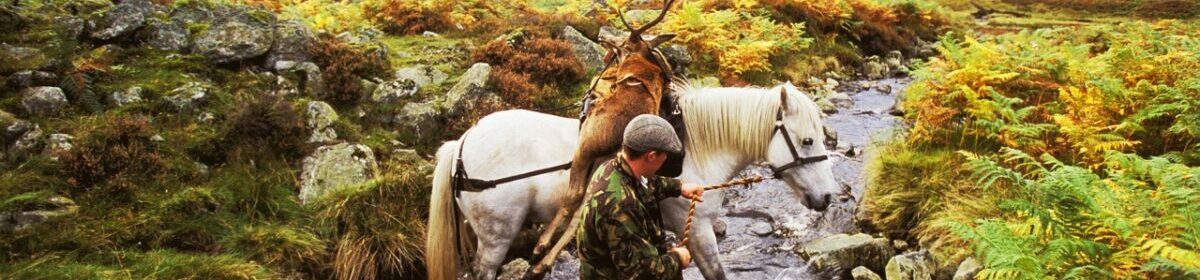
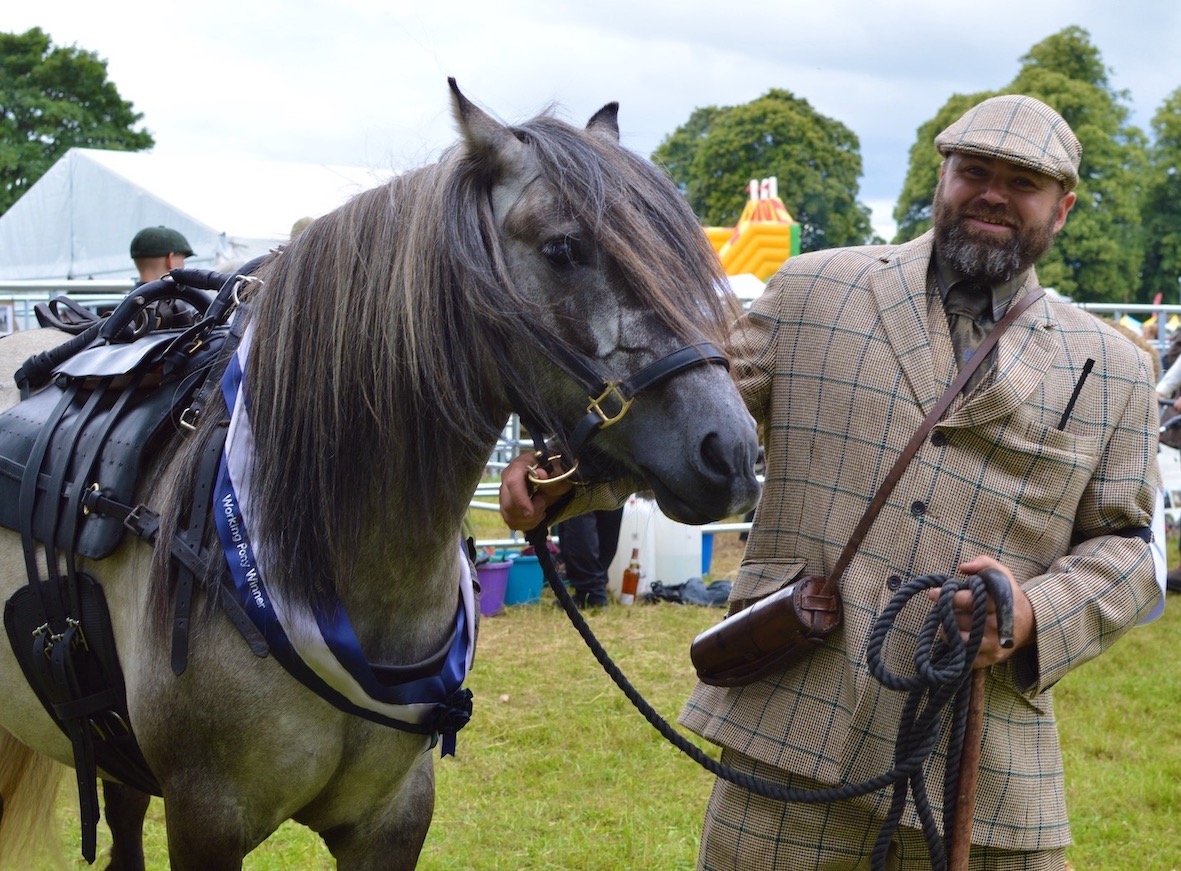
Tulchan of Glenisla Estate wins Fred Taylor Memorial Trophy for working hill ponies at GWCT Scottish Game Fair

Rob Mearns and 5 year old mare Twiggy have won the Fred Taylor Memorial Trophy for Working Hill Ponies at the GWCT Scottish Game Fair.

This year saw a near record entry of 16 ponies.  In second place was Dalhousie Estates, with Balmoral Estate taking third.

The event which was first staged in 2013 was conceived by the Game & Wildlife Conservation Trust and the Association of Deer Management Groups in memory of the late Fred Taylor, dedicated pony man and head stalker on Invermark Estate.  Since then it has become the ‘blue riband’ event for working hill ponies in Scotland.

Winners Rob Mearns and Twiggy

Tom Turnbull, Chair, the Association of Deer Management Groups, said:

“It was an absolutely fantastic turnout this year and probably among the highest in this event’s history. It’s a superb way not just of remembering Fred but also keeping the long tradition of using ponies on Scottish upland estates and, indeed, the interest in breeding and training them, alive.  They are a wonderful part of upland moorland management and it’s a fantastic spectacle to see them at Scone with the stalkers and ghillies in their estate tweeds and the sparkling, spotless deer saddles and tack.”

As well as the Fred Taylor Quaich the winning estate receives free use of an Isuzu DMax pickup for 6 months, a bronze medal from the Highland Pony Society, and a bottle of Whyte & Mackay whisky, Fred’s favourite tipple.

Value of stalkers, gamekeepers and estate staff in fighting upland fires must be recognised in Scottish Parliament says ADMG Chair

Tom Turnbull, Chair of the Association of Deer Management Groups has called for the effort and commitment of stalkers, gamekeepers, estate staff and other volunteers to be recognised publicly and especially in the Scottish Parliament following the recent upland fires in Morayshire.  He said:

“Not only are these professionals undertaking moorland and upland management to prevent major incidents like this happening in the first place, but they are on hand to support the Scottish Fire and Rescue Service when such events occur.  Volunteers from estates all across Scotland have been quick to respond to calls for support, both in terms of manpower and equipment and, despite the recent rain we understand that there is still considerable work ongoing to bring ‘hot spots’ under control and the prevention of further outbreaks.

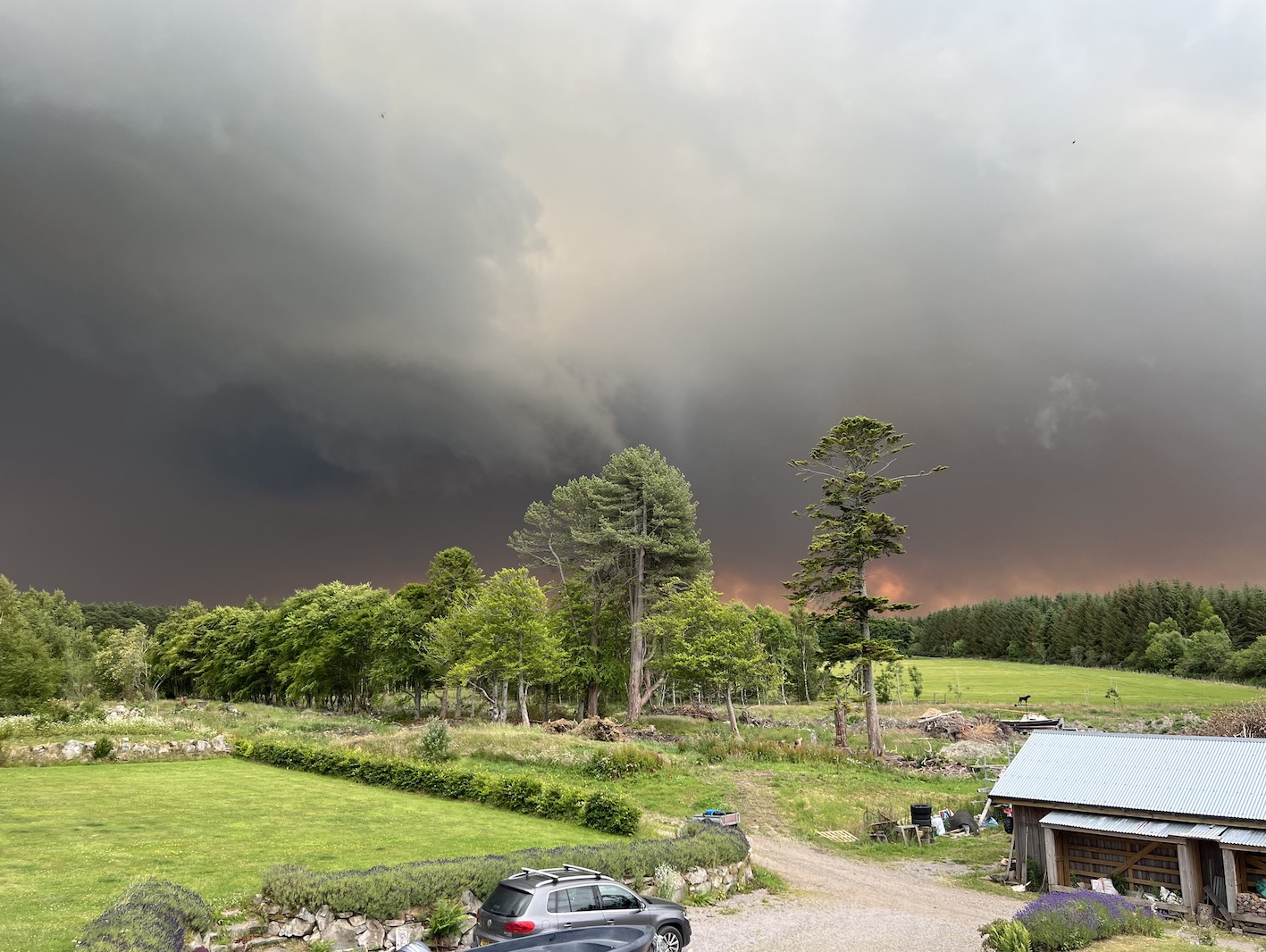
Even from 10 miles away the flames are clearly visible with a huge pall of smoke. 30 June 2025

“Climate change is increasing the potential for wildfires so more public education is vital.  ADMG repeats the call in urging the public not to light fires in upland or woodland areas at any time, not to use disposable barbecues or to discard cigarettes, and to report anything they see that may be suspicious in terms of wildfire.  These ‘hot burn’ events cause untold damage to the environment, to biodiversity, woodland and wildlife and to peatland, and release huge amounts of carbon into the atmosphere – all of which we are working hard to prevent.”

Natural Environment Bill – a message from Tom Turnbull, Chair, ADMG

The publication of the Natural Environment Bill has put into sharp focus the change in emphasis from Scottish Government. The proposed changes to the 1996 Deer Act will enable NatureScot to use regulation not only to prevent damage but will also enable action to be demanded for the preservation, protection, restoration and enhancement of landscapes through the existing regulations, Sections 6, 7 and 8.

Whilst we are pleased that Scottish Government has dropped the controversial Deer Management Nature Restoration Orders, these proposed new triggers for intervention coupled with the ability to intervene to achieve “a relevant target, strategy, or plan relating to the environment, climate change, or biodiversity” give us significant concerns over a lack of clarity around who might be the target of regulatory intervention and at what level, as well as the subjective nature on which such intervention might be based.  ADMG will be seeking clarity and definition on these points.  Despite being much discussed in the run-up to the Bill’s publication the prospect of incentives is worryingly absent from the narrative.

We would also like to better understand how the changes within the Bill will apply to the lowlands of Scotland and those areas outside the established Deer Management Groups, as it would appear that they can only practically be applied to the Highland red deer range. It should not be lost on NatureScot that they rely on DMGs to deliver and report culls in the Highlands, to produce deer management plans, population models and undertake habitat monitoring. Voluntary collaboration on a landscape scale is at risk of being threatened by increasingly heavy-handed regulation such as that proposed. Historically we have seldom objected to the use of regulation by NatureScot but these new triggers may significantly change the socio economics in deer management and hinder any supposed ‘just transition’. Used incorrectly this Bill could break down the good working relationships that we have.

Our member DMGs provide deer management on a landscape scale in partnership with NatureScot. We are already delivering across the vast majority of the uplands, deer numbers are dropping, and 2023/24 saw the highest annual reported cull on record in Scotland. Deer managers are very aware of their vital role in the fight against climate change, and we all value improvements in biodiversity. We will be looking for assurances from Scottish Government that voluntary, collaborative Groups are valued and that actively participating in a Group will not result in increased exposure to or risk of regulation.

We are urging Scottish Government and NatureScot to concentrate on supporting, incentivising and facilitating deer management on a landscape scale and on supporting a buoyant venison sector, rather than threatening the deer management community with new triggers for intervention that may endanger effective future collaboration.

A first for Common Ground on deer management

A deer management group in Aberdeenshire has become the first in Scotland to sign the Common Ground Accord.

Against a background of growing polarisation in the debate on deer management in Scotland, the Accord was created by the Common Ground Forum, an award-winning initiative which brings together those involved in managing deer in upland Scotland.

The Accord sets out a commitment to respect different land management objectives, engage with others both honestly and with an open mind and work together for mutually beneficial solutions.

The Upper Deeside and Donside Land Management Group has now become the first constituted deer management group to sign up to the Accord. The Group comprises seventeen land managers in the private, charitable and public sectors who work constructively together to manage wild deer and other common land-based interests in an area covering around a quarter of the Cairngorms National Park.

Mark Nicholson of Group member Mar Estate explained:

“There has been much heat in the last few years about whether there are too many deer or too few deer in some places, with socio-economic and environmental objectives sometimes being seen to clash.

“In the experience of our Group, the discussion often underplays the ability of people to work together. In the Upper Deeside and Donside area we have wide range of objectives both between and within estate members. The Group provides a place to understand deer populations and movements, identify conflicts and resolve them. These principles are exactly what the Common Ground Accord is about, exemplifying how collaboration can work.”

The Common Ground Forum emerged in 2023 from a two year Finding the Common Ground project in which civic mediators Centre for Good Relations worked with people from across the polarised upland deer management sector to start building trust and relationships. Project Manager for the Forum, Helen MacIntyre, said:

“It is often the case that communication is the key to delivering results. That is particularly true with wild deer which don’t recognise the boundaries we as humans create.

“The Forum takes this concept of communication and trust and seeks to find greater respect and collaboration throughout the upland deer management sector. Many deer management groups already do this, with successes as can be seen in the Upper Deeside and Donside area. The Forum broadens this approach, bringing together individuals and organisations who perhaps have not always communicated well with each other to encourage respectful dialogue and collaboration to achieve better outcomes for everyone.”

ADMG and Scottish Venison Chairs respond to announcement of incentivised pilot deer management schemes

Tom Turnbull, Chair, the Association of Deer Management Groups, said:

“NatureScot has announced two incentive schemes for deer managers, one to the south of Loch Ness for sika, and another covering an area north of Glasgow and west of Stirling for all species but mainly roe and red. These pilots will run for three years and are based on the fact that deer management is delivered in almost all cases at a cost to the manager. A subsidy may therefore support Government targets of achieving the additional 50,000 reduction in deer numbers that is now being widely promoted.

“We welcome these schemes, although a national incentive scheme would have been fairer for everyone and would have supported Government and NatureScot in achieving their targets across the whole country, not just in areas which have undoubtedly been on the radar for action for some time.  We hope that there will be money available for a national scheme if one or both of the pilots are deemed a success sometime four years hence, and the pros and cons of the pilots should be reviewed regularly as they are rolled out with the intention of moving to a national scheme as was previously announced earlier this year by the Scottish Government.”

Richard Cooke, Chair, Scottish Venison, also responds:

“Whilst welcoming the schemes, and an additional initiative in the Cairngorms National Park, we think that they may have their shortcomings. We would like to ensure that the venison sector is also supported, Deer are, after all, the source of one of our healthiest red meat, and deer management has so many positive credentials such as combating climate change, aiding biodiversity recovery and, by reducing food miles, supporting local food for local people.

“Is the capacity and infrastructure in place to support our increasing venison output as we don’t just need to ensure that venison starts its journey along the supply chain, but we need a market that wants that product and the processing capacity to deliver it to the consumer? We have to be so careful not to devalue venison and that people buy it for what it is – a glorious healthy product from a natural harvest undertaken by skilled deer managers and of which we can all be proud.”

Read the NatureScot news release here.
More information on the schemes and how to apply here.

Common Ground Forum stalkers event at Fealar Estate

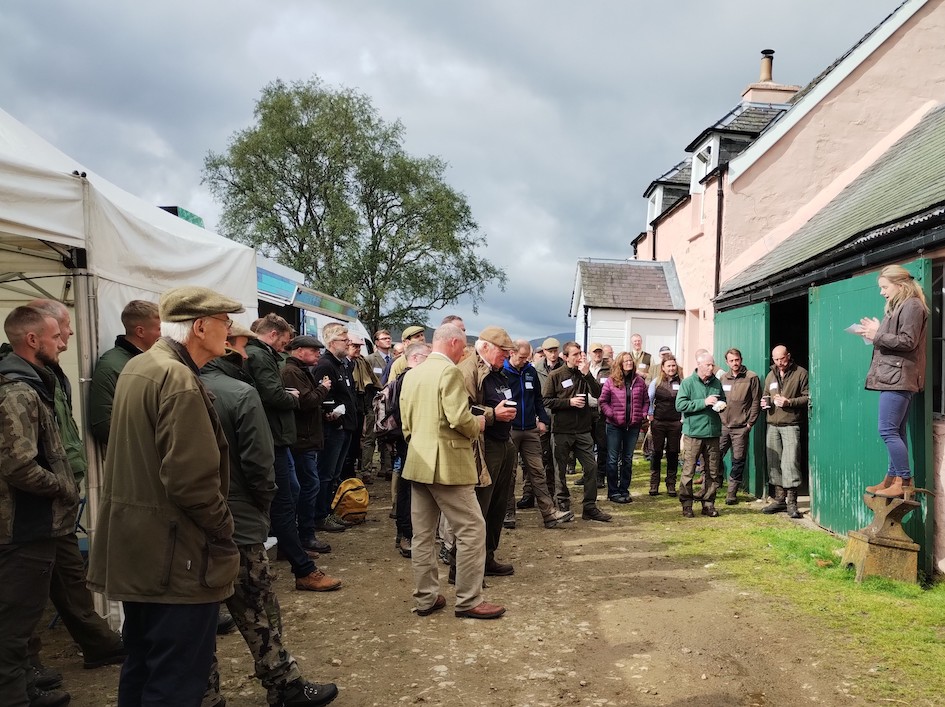
The Common Ground Forum had a successful stalkers event on 8 August at Fealar Estate. The weather was good and there was a packed crowd of over 60 stalkers from across Scotland. In the morning there were group discussions on doing more with less deer and managing deer and peatland, along with demos of drones, thermal safety and an app for recording and monitoring wildlife. After lunch everyone came together for a panel discussion, led by Centre for Good Relations, with representatives from Scottish Government, NatureScot, CNPA and ADMG. The event was a great opportunity for talking about what the future might look like for deer management, and for government to hear views from those on the ground.

Welcome to a very busy Common Ground Forum Fealar Stalker Event

Venison subsidy for Scotland – joint statement from the Association of Deer Management Groups, Scottish Environment LINK and Scottish Venison

The three organisations that last year set the concept of a venison subsidy in motion have welcomed yesterday’s announcement by Mairi McAllan Cabinet Secretary for Wellbeing Economy, Net Zero and Energy that work on venison is included in a set of measures for climate change action.

In the measures announced yesterday it was proposed that: “We will build on the current Cairngorms Deer Pilot to develop a national scheme which incentivises increased management and investment in the venison supply chain.”

In a joint statement the Association of Deer Management Groups, Scottish Environment LINK, and Scottish Venison, who jointly developed this initiative under the auspices of the ground-breaking Common Ground Forum of which they are founding members, said:

“The proposal announced yesterday for the development of a national scheme, further to the imminent pilot project in the Cairngorms, is a real-time result of wider collaboration across the deer sector.  Having jointly made the case for a venison subsidy, we are delighted that by working together – and being seen to work together – Government has now announced a move in this direction.

“This is recognition of the key importance of deer management to the climate and nature crisis. It has the potential to make supplying venison a break-even activity for the first time and will help to support jobs across the deer sector as a whole.  This in turn opens up the opportunity for investing in the business development of the venison sector, with scope for development of local enterprises that can allow more people to enjoy this healthy, eco-friendly and high-quality meat.

“We are also hopeful that funding support can be made available for the development of venison processing and whilst details of this and the wider scheme have yet to be confirmed this is all positive news for the sector.”